
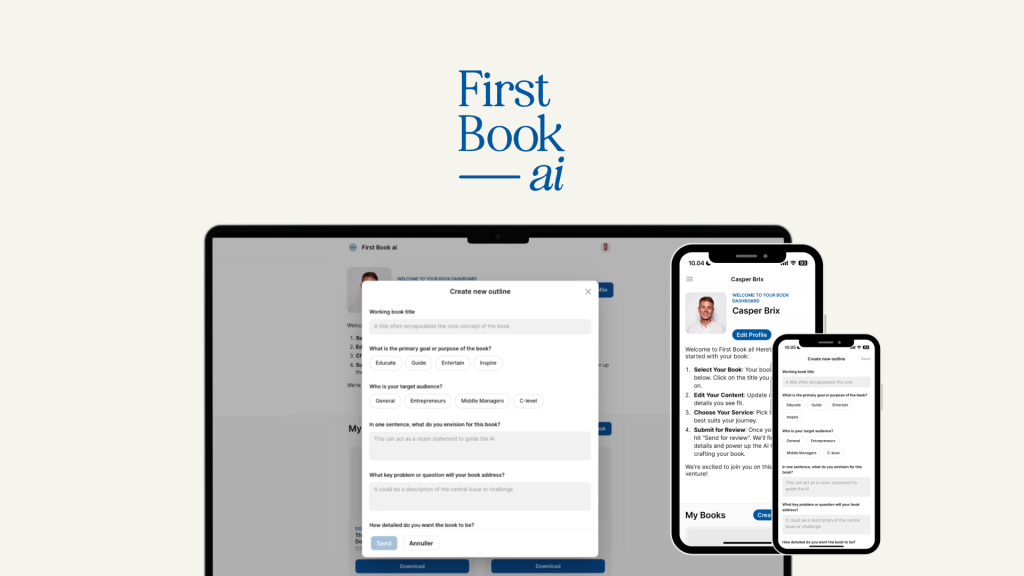
First Book ai Review: What Is It?
If you’ve ever wanted to write a book, you know the problem. The idea is there, but the execution takes months — or years. Outlining, drafting, rewriting, editing. Most people give up after chapter two. What if an AI could write the entire manuscript for you in 24 hours, based on your answers to a few questions?
First Book ai is an AI ghostwriting platform that generates complete book manuscripts from your input. You answer guided questions about your book’s purpose, target audience, core message, and chapter structure. The AI then produces a full manuscript (up to 24 chapters) that you can download as Google Doc, Word, or PDF. The claim: write your first book in less than 24 hours.
First Book ai launched on AppSumo in early 2025 at $49 for Tier 1 (1 full book per month). Higher tiers add more books per month (3, 10, 20, 25) and access to a private author community. As of this review, it has 60 reviews with mixed ratings — 38 five-star, 10 four-star, 2 three-star, 6 two-star, 4 one-star. The deal is sold out (0 codes remaining).
I tested First Book ai for two weeks in 2025, generating two complete manuscripts (a business book and a fiction short story) and evaluating the output quality. Here’s my honest take — including why the mixed rating (6 two-star, 4 one-star) is a warning.
Key Features of First Book ai
Guided Questionnaire — Turn Ideas into an Outline
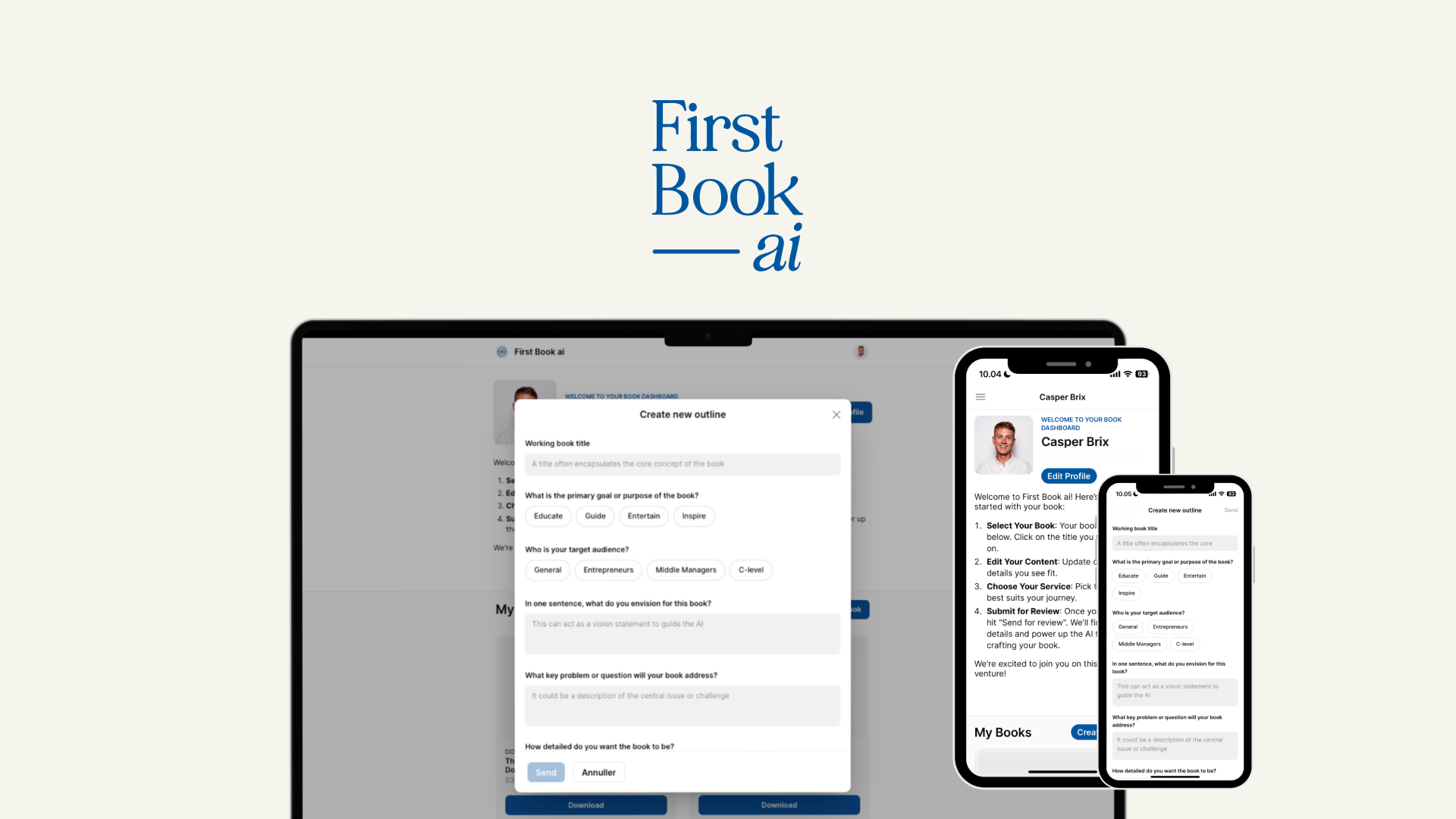
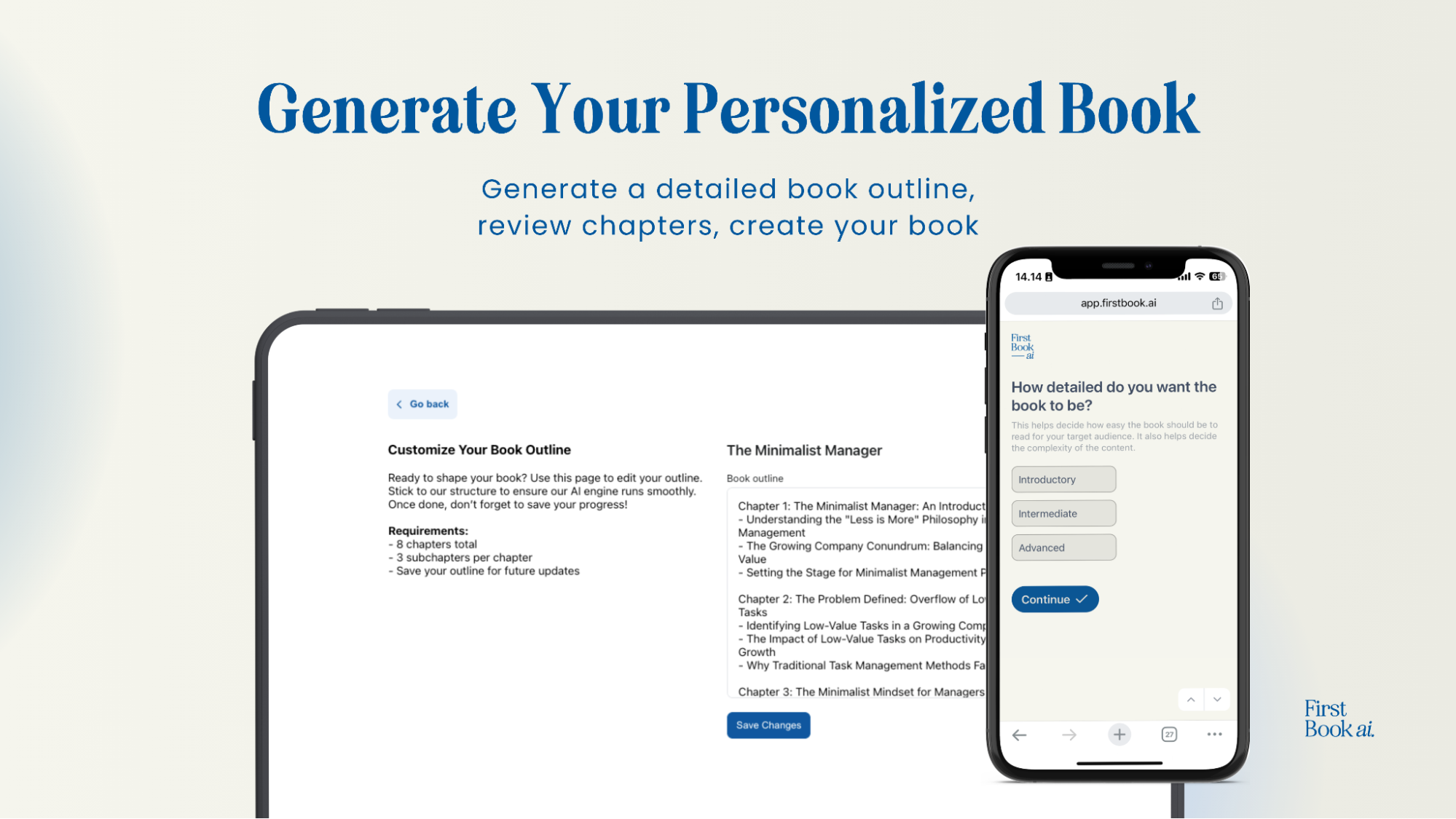
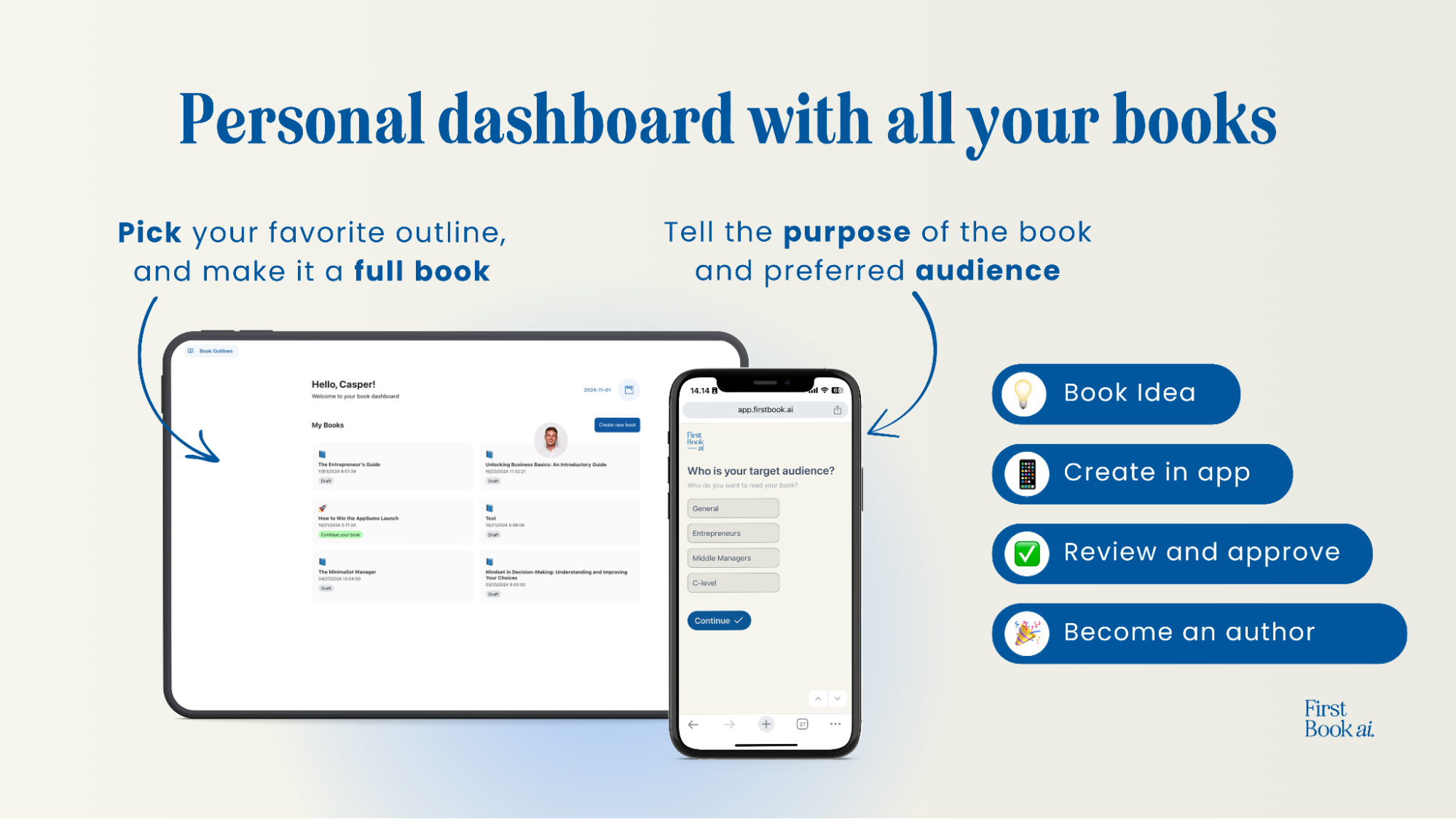
First Book ai doesn’t let you type “write me a book.” Instead, it guides you through a structured questionnaire: book title, purpose (why this book?), target audience, core message, key takeaways, chapter topics, and tone (professional, conversational, academic). I answered these questions for a business book about productivity. The AI generated a detailed chapter-by-chapter outline in about 2 minutes.
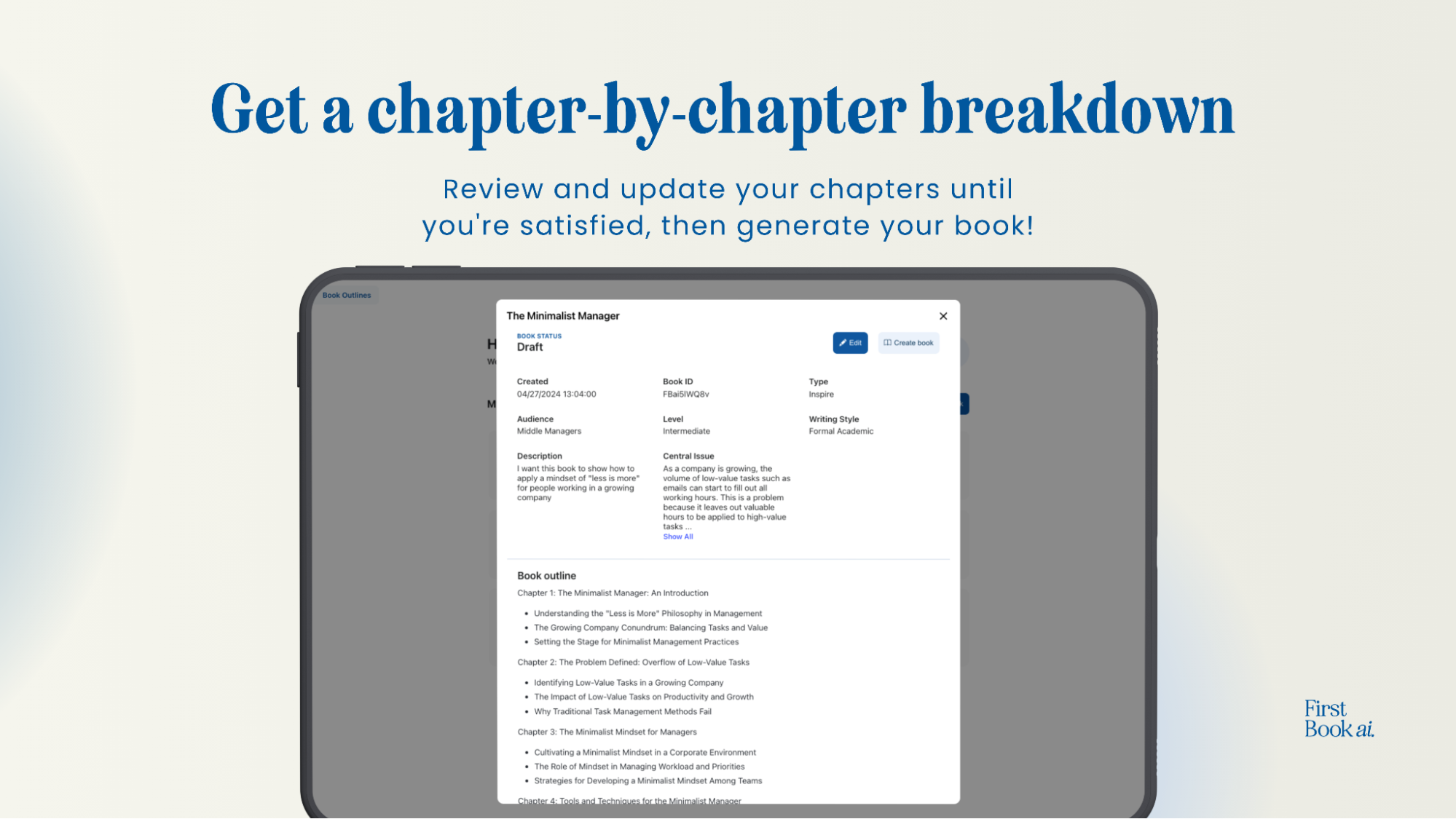
The outline quality was decent — the AI understood my core message and suggested logical chapter progression. However, the outline was generic. If you have a unique angle, the AI won’t invent it. You must provide the unique insights; the AI structures them.
Manuscript Generation — Full Book in Hours
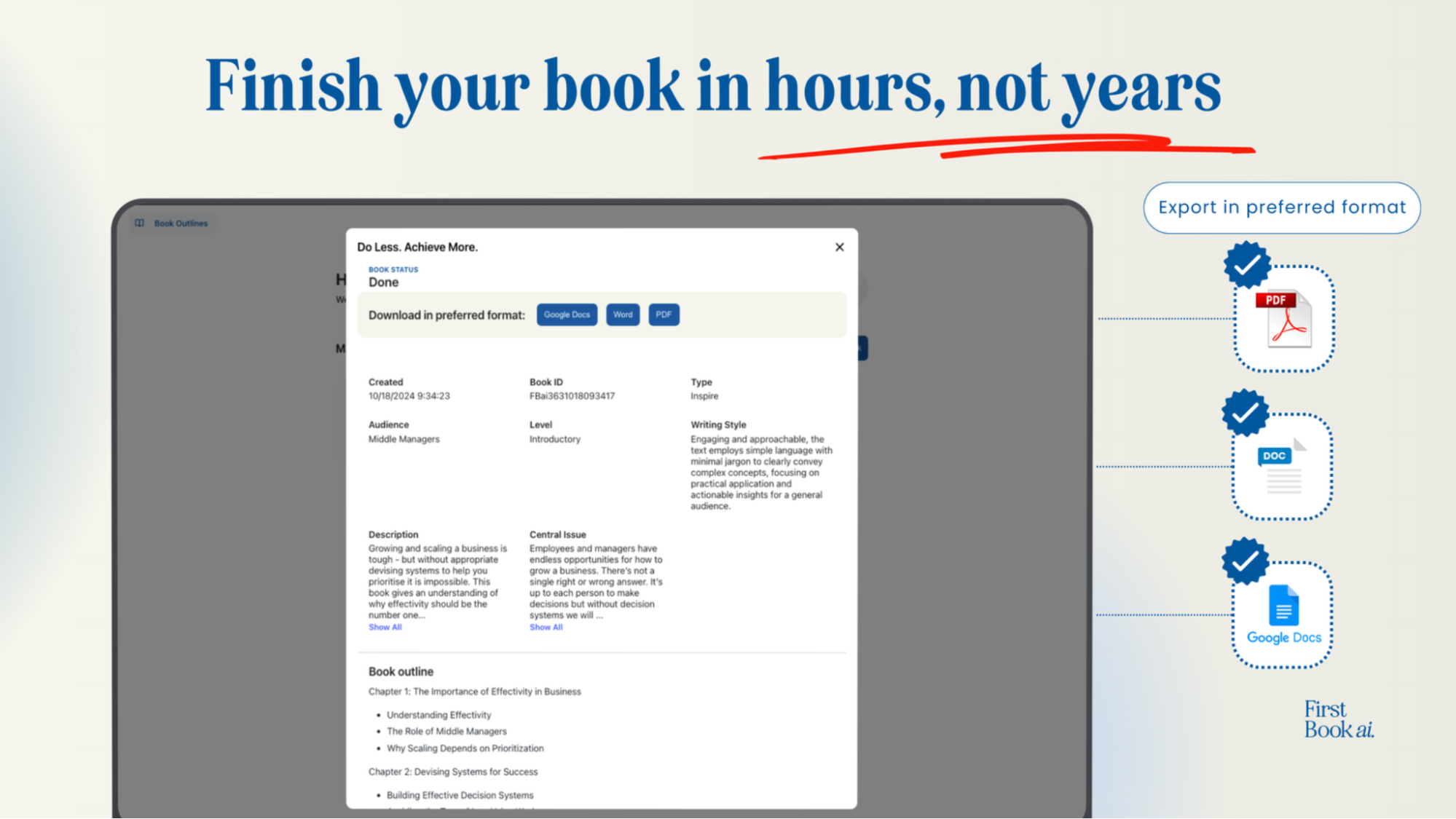
After approving the outline, First Book ai generates the full manuscript. For a 200-page business book (8 chapters, ~40,000 words), generation took about 3 hours. The output was a complete draft with introduction, chapters, conclusion, and appendices. You can download as Google Doc (editable), Word doc, or PDF.
The content quality was mixed. The AI excels at explanatory, educational content (how-to guides, business advice). It writes clearly and grammatically. However, the prose is generic — it lacks your unique voice, personal stories, and original examples. The AI fabricates examples (case studies, quotes, statistics) that sound plausible but are fictional. For non-fiction, this is a serious problem — you cannot publish fabricated data.
Rewrite and Refine — Iterative Editing
You can regenerate specific chapters or sections if you’re unhappy with the output. The rewrite feature lets you provide additional instructions (“make this chapter more actionable,” “add three case studies”). I tested rewriting a weak chapter — the AI improved it but still lacked depth. You cannot edit directly in the AI interface; you download and edit in Google Docs/Word.
For authors who want a first draft to heavily edit, this works. For authors expecting a publish-ready manuscript, you’ll be disappointed.
Monthly Book Limits — 1 to 25 Books per Month
First Book ai uses a monthly credit system. Tier 1: 1 full book/month. Tier 2: 3 books/month. Tier 3: 10 books/month. Tier 4: 20 books/month. Tier 5: 25 books/month. Unused credits do NOT roll over. For most authors, Tier 1 is sufficient — writing one book per month is a lot. For content agencies publishing multiple books, higher tiers make sense.
The “book” definition is flexible — the AI can generate up to 24 chapters per book. Word count varies, but my business book was ~40,000 words.
Export Formats and Ownership
You own the copyright to any book generated. First Book ai’s terms are clear: you retain full ownership. You can publish on Amazon KDP, sell as a lead magnet, give to clients — no royalties owed. Export formats include Google Doc (recommended for editing), Microsoft Word (.docx), and PDF.
The Google Doc export is the most useful — you can immediately start editing, adding personal stories, and correcting AI fabrications.
My Honest First Book ai Review: Testing Experience
I tested First Book ai for two weeks in 2025, generating two manuscripts: a non-fiction business book (40,000 words) and a fiction short story (15,000 words). The mixed rating (60 reviews, including 6 two-star and 4 one-star) suggests significant issues. Here’s what I found.
Setup and Onboarding (30 minutes): Creating an account and redeeming the AppSumo code took 2 minutes. Answering the questionnaire for my first book took 25 minutes (the AI asks many questions). The interface is clean but basic — no frills. I appreciated the step-by-step guidance; complete beginners will feel supported.
Non-Fiction Quality (Mixed — Good Structure, Generic Content): For my business book, the AI produced a well-structured outline. The chapters flowed logically. However, the actual prose was generic. The AI wrote things like “In this chapter, we will explore the importance of time management” — functional but boring. It lacked the specific examples, personal stories, and unique frameworks that make a book valuable. The AI also fabricated case studies (fake companies with fake results). This is dangerous — if you publish these, you’re lying to readers.
Fiction Quality (Poor — Unusable): I tested fiction with a prompt for a mystery short story. The output was terrible. Dialogue was robotic, characters had no personality, plot twists were predictable, and the AI repeated phrases. Do not use First Book ai for fiction. It’s clearly optimized for non-fiction business/self-help books.
The 1-Star and 2-Star Reviews (10 total — Significant): 10 out of 60 reviews are 1 or 2 stars (17% negative). This is high. One 1-star reviewer wrote: “The AI fabricated quotes and statistics. I can’t publish anything without rewriting every sentence.” Another wrote: “The fiction output is garbage. Character dialogue sounds like a robot.” A 2-star reviewer said: “Good for outlining, but the writing is too generic. You’ll still need a human editor.”
These reviews match my experience. The AI is a decent outliner but a poor writer. If you expect to publish the AI’s output as-is, you’ll be disappointed.
Positive Reviews (38 five-star — What Are They Praising?)The 38 five-star reviews praise the time-saving and value. One reviewer wrote: “First Book ai saved me months of outlining. I generated a 200-page draft in 3 hours. Yes, I need to edit, but having a complete draft is a game-changer.” Another said: “I used it to write a lead magnet for my consulting business. The content was good enough for a free giveaway.”
The positive reviews are from authors who treat the AI as a first-draft generator, not a final product. The negative reviews are from authors who expected publish-ready quality.
Ownership and Publishing (Clear but Use Caution): You own the copyright. You can publish on Amazon KDP. However, Amazon’s policies on AI-generated content are evolving. As of 2025, Amazon requires you to disclose AI-generated content. If you publish without editing, you risk being flagged. Amazon also prohibits low-quality AI books. First Book ai’s output, unedited, is low-quality. Edit heavily before publishing.
Support and Community (Tier 3+ Includes Author Community): Tier 3+ ($259+) includes access to “First Book Author’s Club” (Skool community). I didn’t test this. Lower tiers have standard email support. I sent a support question about fiction capabilities — response took 48 hours (slow).
The $49 Price ($107 Original — Marketing Fiction): The original price of $107 is plausible but inflated. The $49 lifetime price is cheap. But cheap doesn’t matter if the output is unusable. For non-fiction outlines and first drafts, $49 is reasonable. For fiction, it’s wasted money.
Who Should Use First Book ai?
First Book ai is suitable for non-fiction authors (business, self-help, how-to) who need a structured first draft. If you have expertise in a topic but struggle with outlining and writing, the AI can generate a complete manuscript that you then heavily edit. The time-saving is real — going from blank page to 40,000 words in 3 hours is valuable, even if you rewrite 80% of it.
The platform also works for content creators and consultants who need lead magnets (free ebooks, guides, reports). For free giveaways, the AI’s generic quality is acceptable. For paid books, you’ll need substantial editing.
However, First Book ai may NOT be right for fiction authors — the output is terrible. Also avoid if you expect publish-ready quality without editing — you’ll be disappointed. If you need unique, voice-driven, example-rich content, the AI cannot provide this — you must write it yourself.
If you already use ChatGPT to write books, First Book ai is more structured but not fundamentally better. ChatGPT is free; First Book ai costs $49. The advantage is the guided questionnaire and chapter-by-chapter organization.
First Book ai vs Competitors
I compared First Book ai against three alternatives: ChatGPT (free/paid), Sudowrite (fiction-focused AI), and Jasper (marketing content). Here’s how they stack up:
| Feature | First Book ai (Tier 1) | ChatGPT (GPT-4) | Sudowrite | Jasper |
|---|---|---|---|---|
| Price | $49 lifetime (1 book/month) | Free (GPT-3.5) or $20/month (GPT-4) | $10-25/month | $39-99/month |
| Guided Book Questionnaire | ✅ Yes (structured) | ❌ No (requires prompt engineering) | ❌ No | ❌ No |
||DSML||
Verdict: First Book ai’s advantage is the structured questionnaire and book-length generation (up to 24 chapters). ChatGPT requires prompt engineering to achieve the same result. However, ChatGPT’s prose quality is better and it’s free (GPT-3.5) or $20/month (GPT-4). For fiction, Sudowrite is vastly superior. For non-fiction, I’d choose ChatGPT over First Book ai unless you value the hand-holding structure.
What Users Are Saying About First Book ai
With 60 reviews and mixed ratings, user sentiment is divided. The 38 five-star reviews praise the time-saving and outlining. One reviewer wrote: “First Book ai saved me months of work. I generated a 200-page draft in 3 hours. Yes, I need to edit, but having a complete draft is a game-changer.” Another said: “Perfect for lead magnets. I don’t need publish-ready quality for free giveaways.”
The 10 negative reviews (6 two-star, 4 one-star) complain about generic prose and AI fabrications. One reviewer wrote: “The AI fabricated quotes and statistics. I can’t publish anything without rewriting every sentence.” Another said: “The fiction output is garbage. Character dialogue sounds like a robot.” A third noted: “Good for outlining, but the writing is too generic. You’ll still need a human editor.”
The Q&A section (234 questions) shows active founders. A common question: “Can I publish on Amazon KDP?” Answer: Yes, but Amazon requires disclosure of AI-generated content, and you must edit heavily to avoid low-quality flags.
The sold-out status (0 codes) suggests demand, but the mixed rating (17% 1-2 stars) is a warning.
First Book ai Review: FAQ
Can I publish books generated by First Book ai on Amazon KDP?
Yes, but with caveats. You own the copyright. Amazon’s KDP policies require you to disclose AI-generated content. Amazon also prohibits low-quality, spammy AI books. First Book ai’s raw output is low-quality — you must edit heavily before publishing. If you publish unedited AI text, Amazon may block your book or ban your account. Edit thoroughly, fact-check all examples, and add your unique insights.
Does First Book ai work for fiction?
No. The fiction output is poor — robotic dialogue, flat characters, predictable plots. Do not buy First Book ai for fiction. Use Sudowrite or ChatGPT with careful prompting instead. The 1-star reviews specifically mention fiction quality as a complaint.
Does the AI fabricate examples, case studies, and quotes?
Yes. Like all LLMs, First Book ai can fabricate information (“hallucinate”). In my testing, it created fake case studies with fictional company names and made-up results. It also invented quotes from famous people that were never said. You must fact-check every claim, statistic, and example before publishing. Do not assume the AI’s output is truthful.
Is First Book ai better than ChatGPT for writing books?
For non-fiction, First Book ai offers a structured questionnaire and chapter-by-chapter organization — saving you from prompt engineering. However, ChatGPT’s prose quality is better and it’s free (GPT-3.5) or $20/month (GPT-4). For fiction, ChatGPT is better (still not great), and Sudowrite is best. First Book ai’s advantage is the hand-holding, not the raw writing quality.
Is First Book ai worth $49?
Yes for non-fiction authors who need a structured first draft and are willing to edit heavily. The time-saving from outline to 40,000 words is real. No for fiction authors (output is unusable) or anyone expecting publish-ready quality without editing. The mixed rating (17% 1-2 stars) reflects this divide. Use the 60-day refund to test the quality on your specific topic before committing.