
You don’t need expensive proprietary software to run an online store. Open source ecommerce software offers powerful features, complete data control, and zero licensing costs—making it an excellent choice for businesses of all sizes.
This comprehensive guide compares the best open source ecommerce software for 2026, helping you find the perfect tool for your online store.
At a Glance: The Best Open Source Ecommerce Software for 2026
- Best Overall: WooCommerce – The most popular open source ecommerce platform.
- Best for Developers: Magento Open Source – Enterprise-grade features.
- Best for Small Stores: OpenCart – Lightweight and easy to use.
- Best Lifetime Deals: LaunchMyStore, Selldone – One-time payment ecommerce solutions.
What to Look For in Open Source Ecommerce Software
Before diving into specific tools, let’s establish what makes great open source ecommerce software:
Key Features to Evaluate
- Data Control: Full ownership of store data.
- Cost Control: No licensing fees.
- Customization: Ability to modify the software.
- Payment Processing: Integration with payment gateways.
- Inventory Management: Track products and stock.
- Scalability: Can grow with your business.
Comparing the Best Open Source Ecommerce Software
| Tool | Ease of Use | Platform | Best For | Weakness | Learning Curve |
|---|---|---|---|---|---|
| WooCommerce | Medium | WordPress | WordPress users | Requires WordPress | Medium |
| Magento Open Source | Expert | Web-based | Enterprise stores | Complex setup | High |
| OpenCart | Easy | Web-based | Small stores | Limited advanced features | Low |
| LaunchMyStore | Easy | Web-based | Small stores (lifetime) | Limited advanced features | Low |
| Selldone | Medium | Web-based | Feature-rich stores (lifetime) | Learning curve | Medium |
Detailed Breakdown of the Best Open Source Ecommerce Software
1. WooCommerce: The WordPress Choice
Pros: Free, flexible, integrates with WordPress, extensive plugin library.
Cons: Requires WordPress hosting, more technical setup.
Best For: WordPress users wanting a free, flexible ecommerce solution.
Cost: Free (hosting extra)
2. Magento Open Source: The Enterprise Solution
Pros: Enterprise-grade features, scalable, powerful.
Cons: Complex setup, requires technical expertise.
Best For: Large stores with technical resources.
Cost: Free (hosting extra)
3. OpenCart: The Lightweight Choice
Pros: Easy to use, lightweight, good for small stores.
Cons: Limited advanced features.
Best For: Small stores wanting a simple solution.
Cost: Free (hosting extra)
💡 The AppSumo Advantage
Affiliate Disclosure: Some links are affiliate links.
LaunchMyStore and Selldone offer exceptional lifetime value for ecommerce with one-time payments.
4. LaunchMyStore: Lifetime Ecommerce
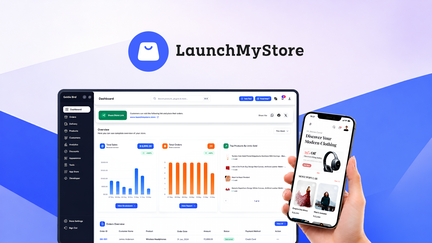
LaunchMyStore lets you launch, manage, and scale your store with AI assistance and a visual theme builder.
LaunchMyStore Pros
- Nova AI assistance.
- Visual theme builder.
- Global payments.
- Lifetime deal: $69 one-time.
LaunchMyStore Cons
- Limited advanced e-commerce features.
- Best for small stores.
Who Should Choose LaunchMyStore?
LaunchMyStore is perfect for small businesses wanting to start an online store without monthly fees.
5. Selldone: Feature-Rich Lifetime Ecommerce
Selldone offers 1,500+ native features with no coding required.
Selldone Pros
- 1,500+ native features.
- No-code store building.
- Native marketing tools.
- Lifetime deal: $109 one-time.
Selldone Cons
- Learning curve.
- Limited design templates.
Who Should Choose Selldone?
Selldone is ideal for businesses wanting comprehensive ecommerce features without monthly costs.
Open Source vs. Commercial: What’s the Trade-Off?
| Aspect | Open Source | Commercial |
|---|---|---|
| Cost | Free | $29-$299+/mo |
| Data Control | Complete | Limited |
| Features | Good to excellent | Excellent |
| Support | Community-driven | Professional support |
Decision Framework
What’s your primary ecommerce need?
- WordPress store: Choose WooCommerce.
- Enterprise store: Choose Magento Open Source.
- Small store: Choose OpenCart.
- Lifetime value (small): Choose LaunchMyStore.
- Lifetime value (feature-rich): Choose Selldone.
Final Verdict
WooCommerce is the most popular open source ecommerce platform. For enterprise stores, Magento Open Source is powerful. For small stores, OpenCart is lightweight.
For lifetime value, LaunchMyStore and Selldone offer exceptional one-time payment deals.
Our Top Recommendations
Best Overall: WooCommerce – The most popular open source ecommerce platform.
Best Lifetime Deal for Small Stores: LaunchMyStore offers AI-assisted ecommerce with a one-time payment.
 Lifetime Deal
−77%
Lifetime Deal
−77%
LaunchMyStore
Launch, manage, and scale your store with Nova AI, a visual theme builder, global payments, and MCP Server support
Pros
- +Lifetime deal pricing (saving $231)
- +Nova AI assistance
- +Visual theme builder
- +Global payments
- +MCP Server support
Cons
- −Limited advanced e-commerce features
- −Additional payment gateways would be beneficial
- −User interface learning curve
Alternatives: Shopify BigCommerce WooCommerce
Best Lifetime Deal for Feature-Rich Stores: Selldone provides 1,500+ native features with a one-time payment.
 Lifetime Deal
−93%
Lifetime Deal
−93%
Selldone
Build, manage, and scale your online store with 1,500+ native features—no plugins or coding required
Pros
- +Lifetime deal pricing (saving $1,411)
- +1,500+ native features
- +No-code store building
- +Native marketing tools
- +Scaling and growth tools
Cons
- −Limited advanced customization
- −User interface learning curve
- −Additional design templates would be beneficial
Alternatives: Shopify WooCommerce BigCommerce
Choose the open source ecommerce software that fits your technical expertise and budget.